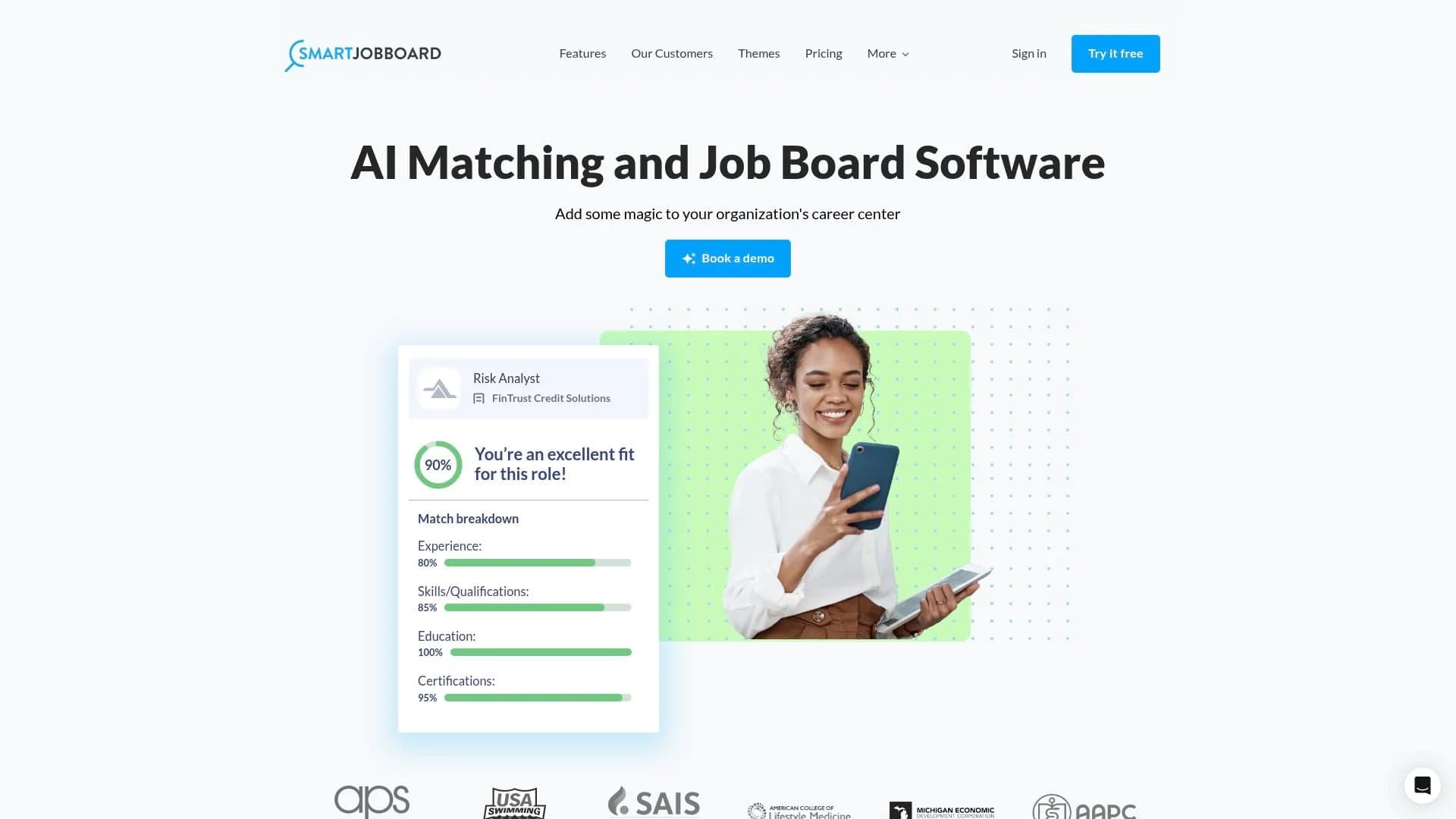
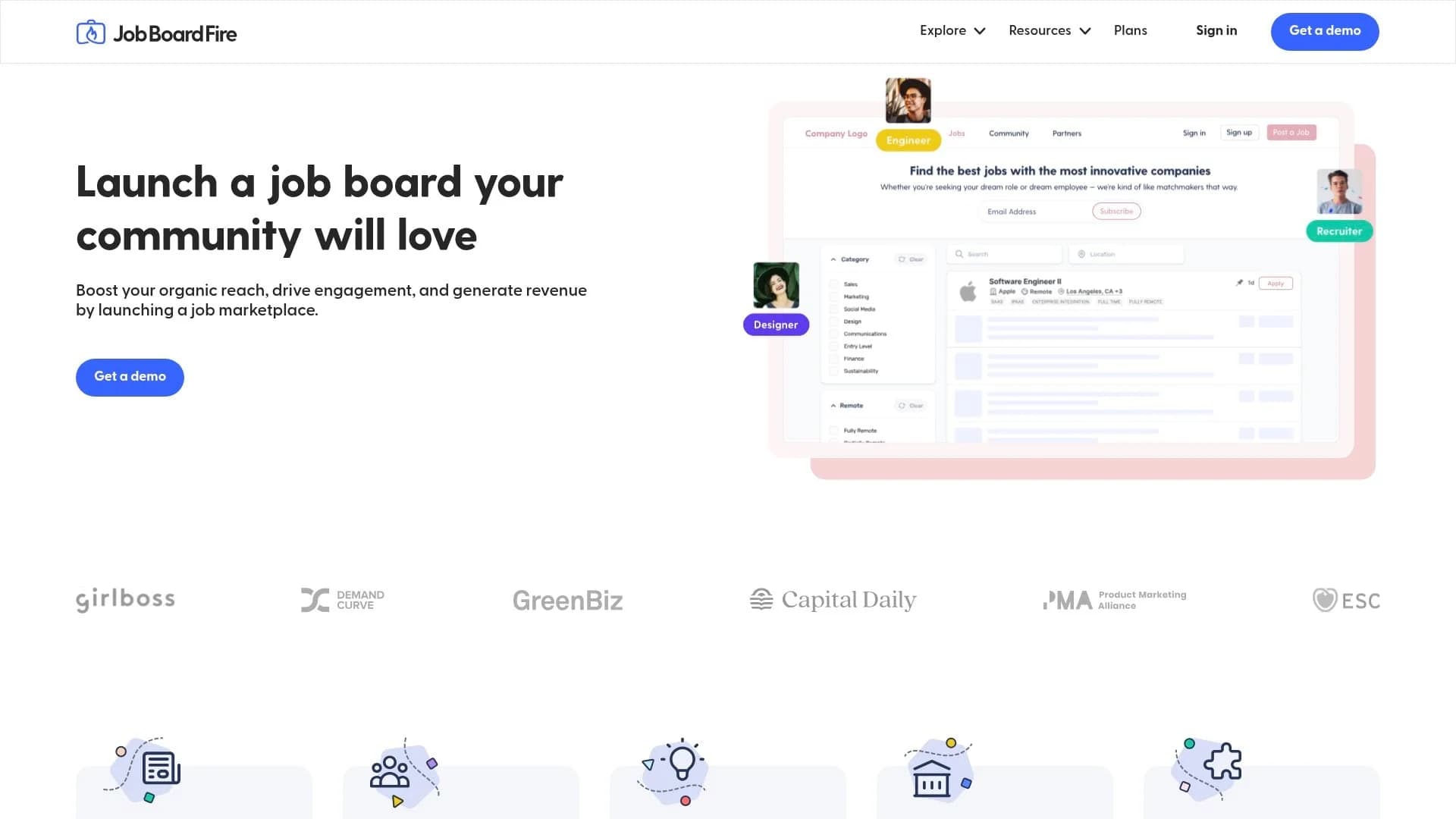
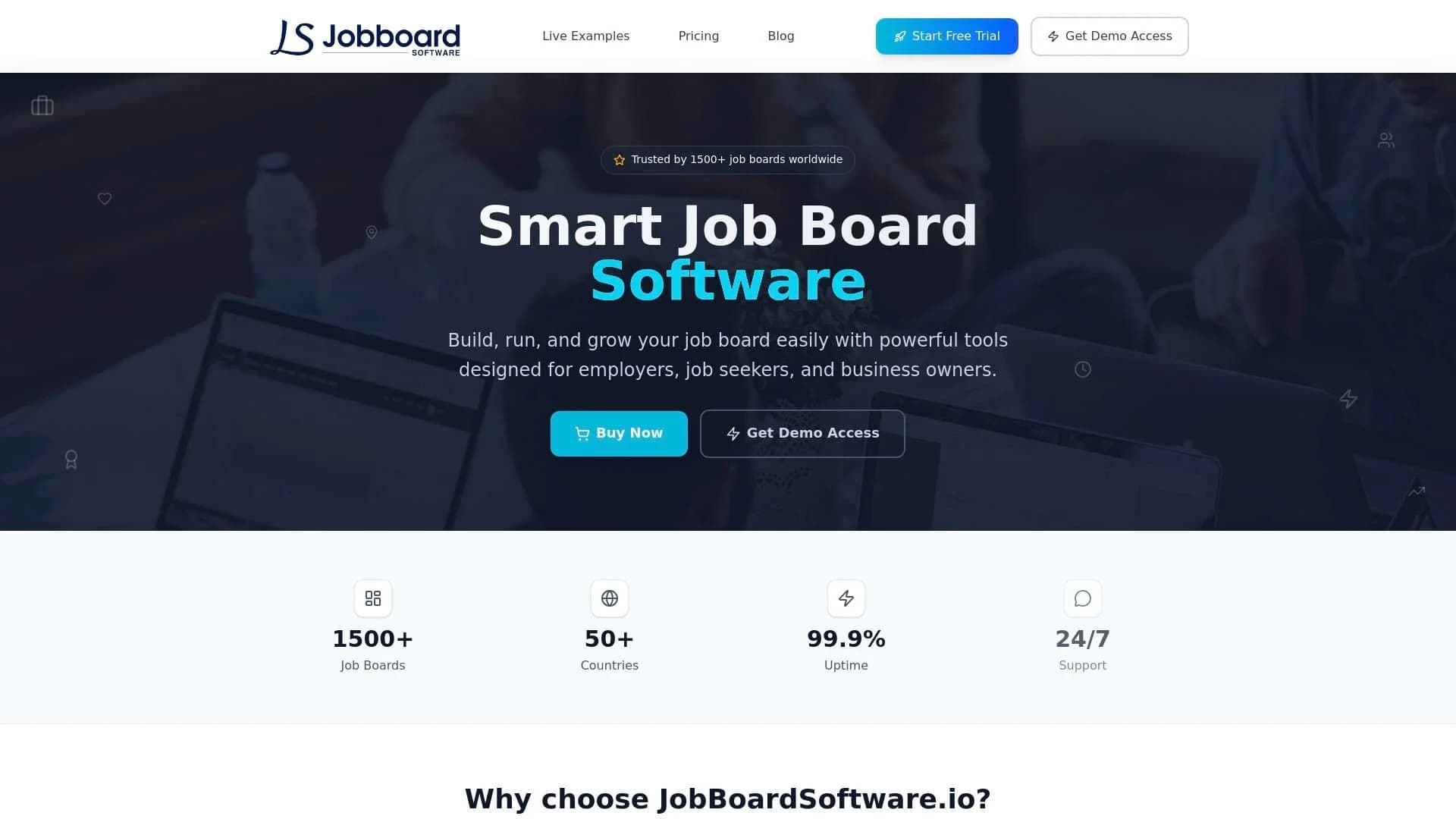
Artha Job Board markets itself as the fastest way for creators and communities to launch a job board. With a free Starter plan, 10-minute setup, and native mobile apps, it removes a lot of friction from getting started. AI matching and auto-backfilling on higher tiers add real value, and multi-language support makes it appealing for international audiences.
But speed of launch is only part of the equation. Once your board is live, you need strong SEO, flexible monetization, and reliable aggregation to actually grow. Artha is a newer platform with a smaller user base, and some features are still in development. If you are weighing your options, here is how to think about what matters most.
How to evaluate Artha alternatives
Our job board software buyer's guide covers the 9 key decisions for choosing a platform. Here's how those decisions apply when evaluating Artha alternatives specifically.
Artha is built for people who want to go from zero to live job board as fast as possible. That is a real strength, but it also means the platform optimizes for onboarding over depth. When comparing alternatives, focus on the criteria that will matter six months after launch, not just on day one.
Business model — time to launch vs. time to scale
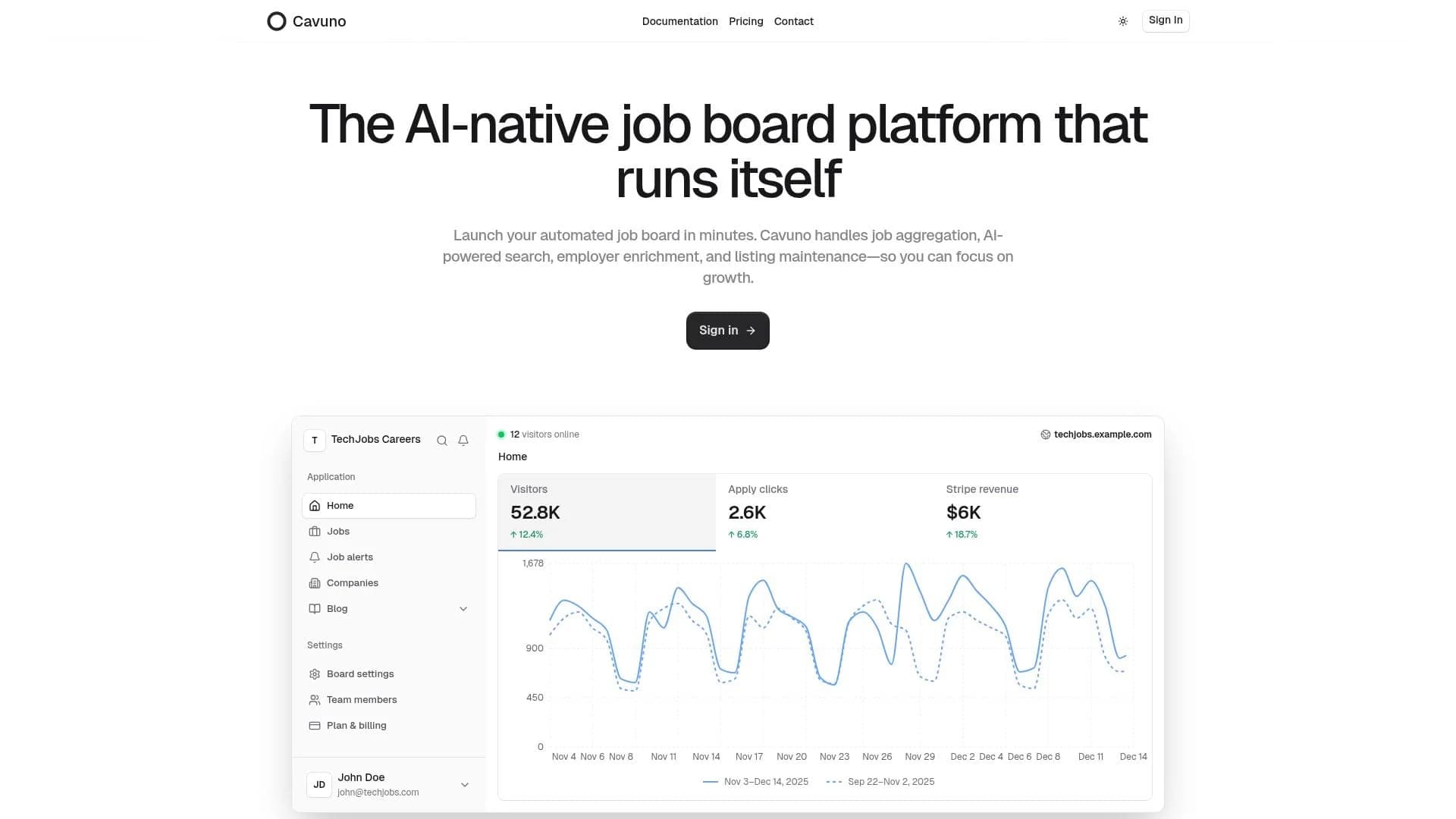
Artha's 10-minute setup is impressive, and most modern platforms can get you live within a day. The more important question is how quickly you can grow after launch. Cavuno pairs a fast setup with job aggregation included on all plans, semantic search, and AI job matching for $39/month, which means your board has real content from the start. Artha's free plan lists 500 candidates, so confirm its active-job limit with Artha. A guest jobs API is documented; administrative access needs confirmation. That is fine for testing, but limiting once you want to scale.
Monetization infrastructure
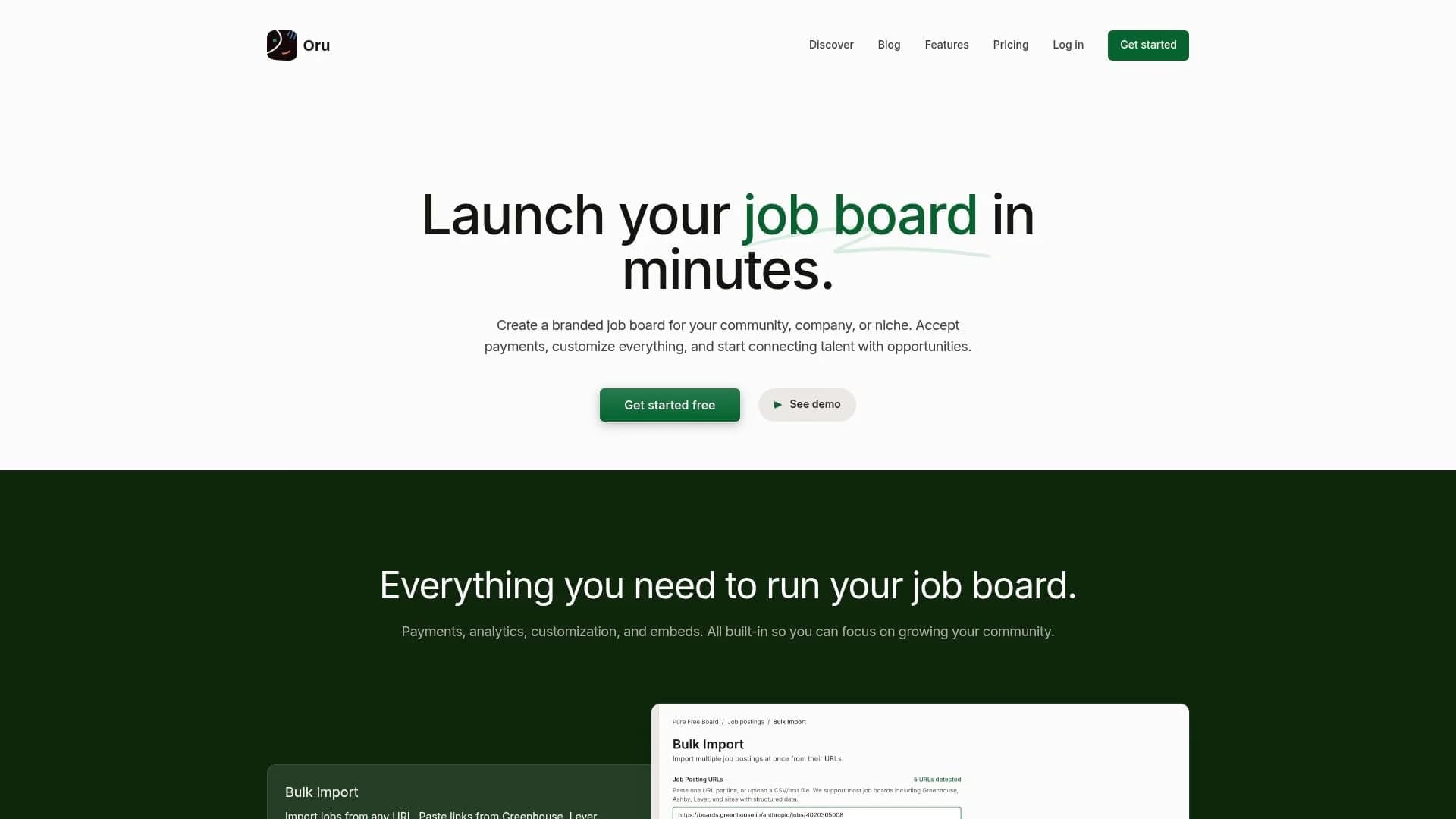
Artha's free plan gives you a working board, but confirm employer payment features and which plan includes the ATS. Cavuno offers full monetization at $39/month with no revenue share. Oru takes the opposite approach: free to use, but takes a cut of your revenue. Kardow comes in at $79/month with straightforward pricing. The right model depends on whether you would rather pay upfront or share earnings later. Cavuno supports both: flat plans from $39/month, or revenue-share terms if you ask the team.
Customization depth — design without code
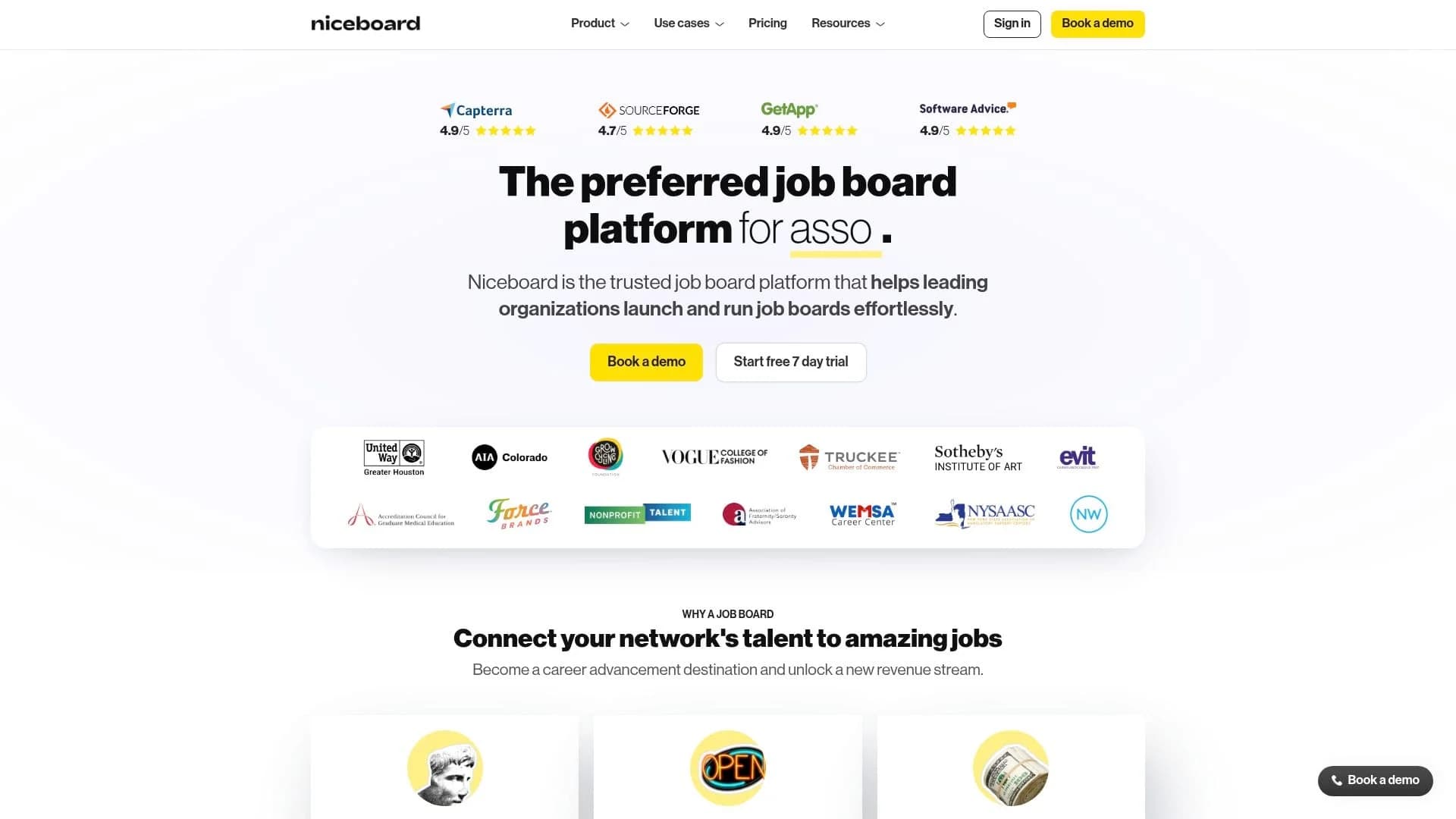
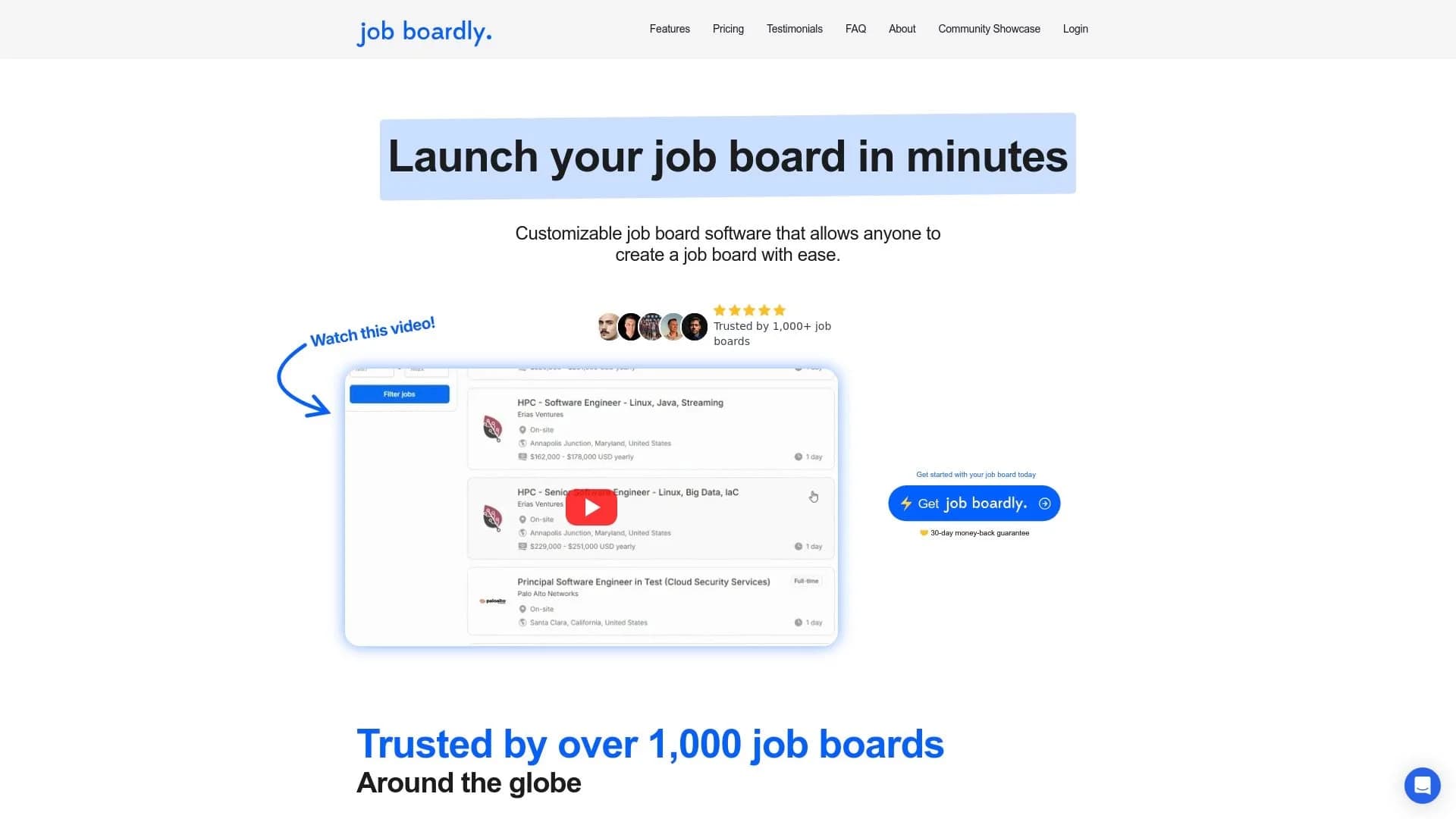
Creators and community builders care about brand consistency. Artha gives you a custom theme, homepage settings, and custom pages on every plan, and its AI is focused on matching and backfill. If you need more control, Cavuno's AI website builder lets you describe the board and the changes you want, any page or layout, and it builds the frontend for you, no CSS required. Niceboard and Job Boardly (starting at $60/month) also offer more design options than Artha, though you are still working inside their themes.
Search experience — audience-first vs. feature-first
Artha leads with features: AI matching, mobile apps, multi-language support. That is appealing on a features page, but what matters more is whether the platform helps you reach your specific audience. If you run a niche community, you need strong SEO and content tools as well as matching. Cavuno pairs semantic search and programmatic SEO with candidate AI matching (Matches page plus weekly matching emails) from $39/month. Artha's AI matching unlocks on Scale, listed at $149/month ($120/month billed annually); confirm the price for your candidate volume. If you need native mobile apps more than you need SEO depth, Artha's feature set still makes sense.
Technical architecture — ecosystem maturity
Artha is newer to the market, which means fewer integrations, a smaller support community, and some features still marked as "coming soon." That does not make Artha a bad choice. It means you should verify the specific features you need are live, not just on a roadmap.
Which Artha alternative is right for you?
If you want the strongest combination of speed, aggregation, and value, Cavuno is the clearest upgrade. You get job aggregation included on all plans (up to your active job limit), semantic search, AI job matching, and full monetization tools for $39/month. Compare that with Artha's Growth ($79/month, or $65 billed annually) and Scale ($149/month, or $120 billed annually), and confirm the price for your candidate volume; Cavuno matching is not gated to a Scale tier.
If budget is your primary constraint, Cavuno is still the pick: Starter is $39/month ($29/month billed annually) with a 14-day trial, no card required, and no revenue share. Oru is another free option with a revenue share model, which works well if you are not sure your board will generate income yet. Kardow at $79/month is another option, with an AI editor that applies plain-language edits to its templates and 2,000 monthly import credits included.
If design is your priority, Cavuno is also the pick: its AI website builder builds the board from your brief and can change any page or layout. Job Boardly at $60/month offers a Theme Builder for section-by-section edits to its theme. For enterprise-scale operations, Cavuno's plans run through Scale (50,000 active jobs) to Enterprise, built by the team behind Himalayas, one of the world's largest remote job boards, used by millions of people each year.
If Artha's native mobile apps are critical to your use case (say you are running a community with a mobile-first audience), it may still be the right fit. For multi-language boards, Cavuno supports 19 board languages on every plan. Confirm the Growth or Scale price for your candidate volume before outgrowing the free tier.
Best for: Entrepreneurs and communities who want a job board that looks full from day one, with AI search and aggregation included on every plan.
Cavuno pricing
14-day Starter trial, no credit card. Paid plans from $39/month, or $29/month billed annually. See pricing.
- •AI website builder
- •AI tagging & enrichment
- •AI resume parsing
- •Built-in blog
- •Candidate profiles
- •Registration wall
- •Sign in with your organization (SSO)
- •Built-in ATS
- •Quick apply
- •Job seeker subscriptions
- •Charge for job posts
- •Direct messaging (employers ↔ candidates)
- •Custom domain + SSL
- •Job import (CSV, XML, recurring feeds)
- •Embeddable jobs widget
- •API access
- •SDK
- •Cavuno CLI
- •MCP server
- •500 active jobs
- •Unlimited team members
- •1K subscribers
- Everything in Starter, plus:
- •1,500 active jobs
- •5K subscribers
- •Optional Cavuno footer credit
- •Custom email sender domain
- Everything in Basic, plus:
- •5,000 active jobs
- •15K subscribers
- Everything in Grow, plus:
- •15,000 active jobs
- •45K subscribers
- Everything in Advanced, plus:
- •50,000 active jobs
- •100K subscribers
- Everything in Scale, plus:
- •Custom active jobs
- •Custom seat allocations
- •Custom subscriber limits
Cavuno features
Built by the team behind Himalayas, one of the world's largest remote job boards, used by millions of people each year. Running Himalayas taught the founders how to index hundreds of thousands of pages for Google for Jobs and build programmatic landing pages that rank for thousands of long-tail searches. Cavuno packages that experience into an AI-native platform. Job aggregation populates your board with relevant listings from day one, so you never launch to an empty page. When you already have data or a partner feed, CSV and XML import plus recurring XML feed URLs keep listings in sync without a custom worker. AI auto-tagging, company enrichment, hybrid search (where "Ruby developer" also finds "Rails engineer"), AI resume parsing (candidates upload a resume and AI fills out their profile, including bio, skills, experience, and education), Quick apply for jobs using native applications, and a built-in ATS (native applications, applicant review, and a hiring pipeline) is included on every paid plan. The AI website builder creates your board's frontend from a plain-language brief and edits it the same way: change any page, add a new one, select an element in the preview to focus it, compare versions, share a draft for review, and publish when it is ready. Every board starts from a starter theme that passes Google's Core Web Vitals on mobile and is versioned in Git, so when Cavuno ships fixes or improvements to that theme it merges them into each board's live version around the operator's customizations and checks the result before publishing: your edits stay yours, and our updates still reach you. On a paid plan, developers can also check the site out with the Cavuno CLI, edit it with Claude Code, Codex, or Cursor, and submit it back for Cavuno to build. A built-in blog, embeddable jobs widget, auto-generated programmatic SEO pages (by category, location, and salary), and search-engine notification within minutes via Google Indexing API and IndexNow drive organic traffic without technical work. On every paid plan, API access, the SDK, the Cavuno CLI, and the first-party MCP server let technical teams build custom frontends, automate workflows, and operate the same job board programmatically. Monetize with paid job posts, bundles, subscriptions, memberships with member pricing and included posts, job seeker subscriptions, talent access plans with resume unlocks or candidate contact credits, Adsense, and discount codes, all with zero revenue share. Plans are Free, Starter ($39/mo), Basic, Grow, Advanced, Scale, and Enterprise—start free, then upgrade from $39/month. See all features or read the docs.
Pros
- +Built by the Himalayas team (millions of users, one of the largest remote job boards)
- +Aggregation fills your board from day one, so you never launch empty
- +CSV/XML job import and recurring partner XML feed URLs on every plan
- +AI auto-tagging, company enrichment, and hybrid search on every plan
- +AI resume parsing auto-fills candidate profiles on every plan
- +Built-in ATS for native applications, applicant review, and a hiring pipeline on paid plans
- +Talent access plans with resume unlocks and candidate contact credits
- +Memberships you sell or assign, with member pricing and included posts applied at checkout
- +Quick apply for jobs that use Cavuno native applications
- +Google Indexing API and IndexNow notify search engines within minutes when jobs change
- +Programmatic SEO pages (category, location, salary) from years of ranking at Himalayas
- +Zero revenue share and zero per-job fees
- +Self-serve SSO (OpenID Connect/OAuth 2.0, Okta preset) with per-role sign-in switches, on every plan
- +14-day Starter trial, then plans from $39/month (Starter through Scale; Enterprise custom)
- +AI website builder creates and edits any page on your frontend from a brief, including new pages, with versions and share links
- +Edit the board's frontend with your own coding agent (Claude Code, Codex, Cursor) through the Cavuno CLI on Starter and above, without using AI website builder credits
- +Starter theme fixes and improvements are merged into customized boards and checked before publishing, and never overwrite your changes
- +Built-in blog and embeddable jobs widget
- +API access, SDK, Cavuno CLI, and first-party MCP server on every paid plan
- +Your own logo, colors, and domain on every paid plan. Cavuno footer credit removable, and custom email sender, on Basic and above
Cons
- −Stripe is currently the only payment processor
Verdict
Built by the team who scaled Himalayas to millions of users, Cavuno solves the two hardest problems for new job board operators: getting enough jobs to look credible (aggregation plus CSV/XML and recurring feeds) and helping candidates find the right ones (AI-powered search). Every paid plan also includes the API, SDK, CLI, and MCP server, so you can keep the hosted frontend or build your own without rebuilding the backend. Start free, upgrade when you're ready.
Best for: Entrepreneurs, solopreneurs, and first-time job board creators on a budget.
Job Boardly pricing
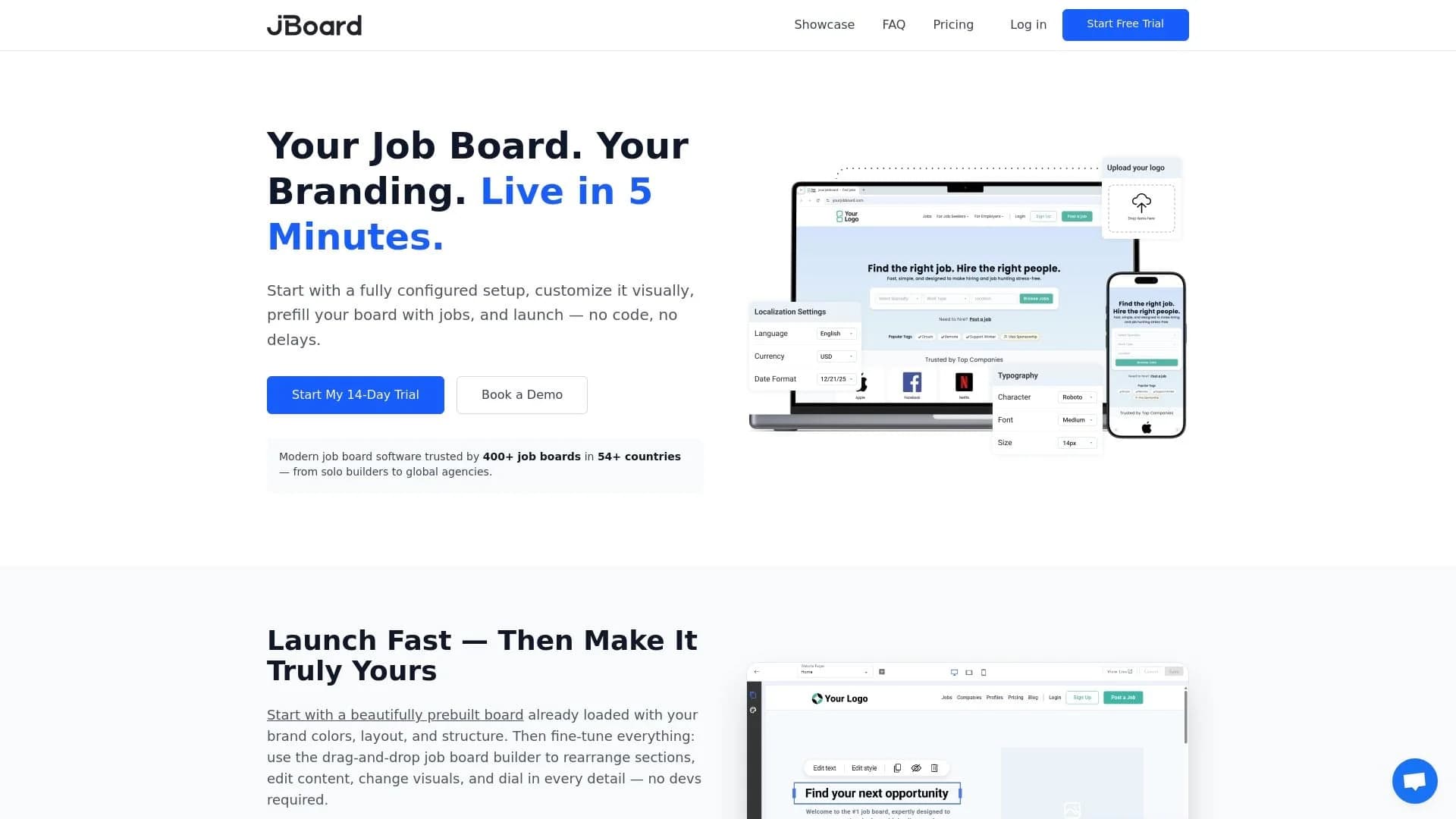
$60–240/month ($40–160/month annual). Standard, Pro, and Ultra plans with a 30-day money-back guarantee. Pro adds white label. Includes 1,000–5,000 backfiller and aggregator imports per month, then credits at $0.010–$0.012 each (1,000 for $12, 10,000 for $100; valid 12 months).
Standard
$60/month
30-day money-back guarantee
- •Job board builder and Theme Builder
- •Custom domain
- •Charge for job posts, featured listings, and packages
- •Candidate paywall
- •Job backfiller and job aggregator (12M+ jobs)
- •CSV importer
- •Google Indexing API
- •Multi-language support
- •Weekly job alert emails
- •Blog
- •Candidate and employer profiles and dashboards
- •2 team members, 1,000 imports/month
- •10,000 active jobs, 10,000 job alert subscribers, 10,000 job seeker profiles
Pro
$120/month
30-day money-back guarantee
- Everything in Standard, plus:
- •White label
- •Employer subscriptions
- •XML importer
- •Custom job alert send day, time, and timezone
- •Management API & webhooks
- •5 team members, 2,000 imports/month
- •20,000 active jobs, 20,000 job alert subscribers, 25,000 job seeker profiles
Ultra
$240/month
30-day money-back guarantee
- Everything in Pro, plus:
- •Headless API
- •In-product messaging
- •Priority support
- •10 team members, 5,000 imports/month
- •50,000 active jobs, 50,000 job alert subscribers, 100,000 job seeker profiles
Job Boardly features
Lower-cost platform with three plans: Standard, Pro, and Ultra. Every plan includes the job board builder, Theme Builder, custom domain, multi-language support, blog, paid job posts, candidate paywall, Job Backfiller and Job Aggregator with access to 12M+ jobs, CSV importing, Google Indexing API, and candidate and employer profiles with dashboards. Plans include 1,000–5,000 imports per month, with extra import credits available. Pro adds white label, employer subscriptions, XML importing, a management API and webhooks, and custom job alert scheduling. Ultra adds a headless API, in-product messaging, and priority support. Active jobs are capped at 10,000, 20,000, and 50,000 by plan.
Pros
- +Standard plan starts at $60/month ($40/month billed annually)
- +Candidate and employer profiles and dashboards on every plan
- +Effective backfilling automation with 12M+ jobs available
- +Quick setup
- +30-day money-back guarantee reduces risk
Cons
- −Active jobs are capped by plan (10,000 on Standard, 20,000 on Pro, 50,000 on Ultra)
- −White label, API access, and webhooks require the Pro plan ($120/month); the headless API requires Ultra ($240/month)
- −Imports beyond the monthly allowance (1,000 on Standard) cost $0.010–$0.012 per credit
- −Theme Builder edits the existing theme section by section; AI changes mean exporting a section's HTML/CSS to your own assistant
Verdict
Job Boardly works for boards that need a high active-job cap on an entry plan, though Cavuno starts lower at $39/month, and active-job caps and import credit costs should be factored in as the board grows.
Best for: Solo founders and growing boards that want designer templates with an AI editor, built-in monetization, and bundled import credits.
Kardow pricing
$79–379/month ($59–284/month billed yearly). Includes 2,000–25,000 import credits/month, with custom Enterprise pricing available.
Starter
$79/month
14-day free trial
- •Designer templates with an AI editor for design and layout
- •Custom domain
- •Stripe payments
- •Employer and candidate accounts
- •Job applications and resume upload
- •Built-in blog and SEO pages
- •2,000 import credits/month
- •1 team seat, 1 job board
- •Optional launch service $299 one-time
Pro
$179/month
14-day free trial
- Everything in Starter, plus:
- •Remove Kardow branding
- •Custom email domains
- •Subscriptions, packages, and paywalls
- •Google login and fast indexing
- •Custom fields and filters
- •AI screening questions
- •REST API access
- •8,000 import credits/month
- •3 team seats
- •Launch service included
Scale
$379/month
14-day free trial
- Everything in Pro, plus:
- •25,000 import credits/month
- •Unlimited team seats
- •Invoices and payment links
- •Up to 3 separate job boards
- •Priority support
Kardow features
Template-based job board builder with an AI editor and credit-based imports (2,000–25,000 import credits per month). You pick a designer template, then type plain-language changes such as new sections, colors, filters, or a new layout, and the editor applies them; it edits the template rather than building the site from a brief. Starter includes a custom domain, Stripe monetization, employer and candidate accounts, applications, resume uploads, blog, SEO pages, one team seat, and one board, with an optional $299 launch service. Pro adds branding removal, custom email domains, subscriptions, packages, paywalls, Google login, fast indexing, custom fields and filters, AI screening questions, REST API access, and three seats. Scale adds invoices and payment links, unlimited seats, up to three boards, and priority support. Enterprise covers more than three boards, sub-folder hosting, and migration planning.
Pros
- +AI editor applies plain-language design and layout edits to its templates on every plan
- +Says you can download your code whenever you want (via its CLI on Pro and Scale)
- +0% platform fees on your revenue
- +Built-in monetization with subscriptions, packages, and paywalls on Pro
- +Custom fields, filters, and AI screening questions on Pro
- +Multi-board support on Scale
Cons
- −Newer platform building its track record
- −Starter is $79/month with one seat; optional launch service costs $299
- −Import credits are metered per plan, so high-volume boards need Pro or Scale
- −Fewer enterprise features than established competitors
- −The AI editor changes the designer template you picked rather than building a site from your brief
Verdict
Kardow appeals to founders who want a designer template they can adjust in plain language, plus built-in monetization, though the $79 entry price and metered import credits matter at volume.
Competitor research was updated in October 2026. Some details rely on earlier dated sources or require a vendor quote. Confirm current terms before purchasing.